

ChengrongEra brand has been launched for about one year.
Over the past year, many customers of ChengrongEra Ultrafiltration Water Filters have run into problems with water filters simply because they lack a clear understanding of the overall whole house water filtration system design framework.
As the saying goes, choice matters more than effort, which is especially true for all the users of whole house water filtration systems. Only by picking the right type of filtration system can you judge whether your water purifier is a good fit.
1. Introduction to the Whole House Water Filtration System Framework
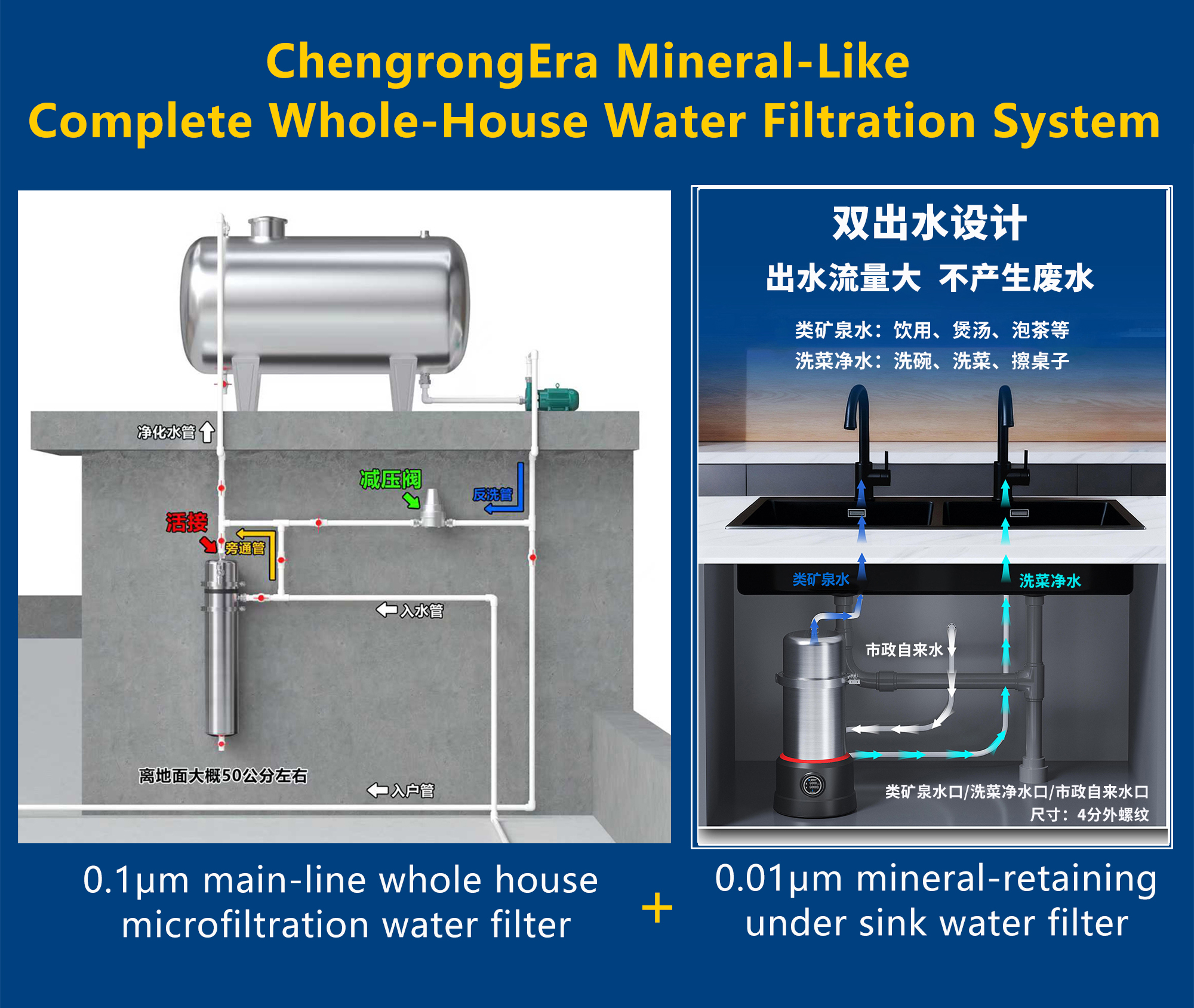
A complete whole house water filtration system consists of a whole-house ultrafiltration water filter at the main water inlet plus an under-sink water filter for the kitchen. Their installation locations are different, so their functions vary accordingly. However, many customers often confuse the two, which is a common misunderstanding.
The whole-house ultrafiltration water filter installed on the main pipe has a filtration precision 400 times higher than traditional whole-house water filters. It can effectively intercept 99.99% of sediment, rust, colloids, insect eggs and other impurities in raw water. It delivers crystal-clear water to the entire household pipeline and comprehensively improves the whole-house water quality.
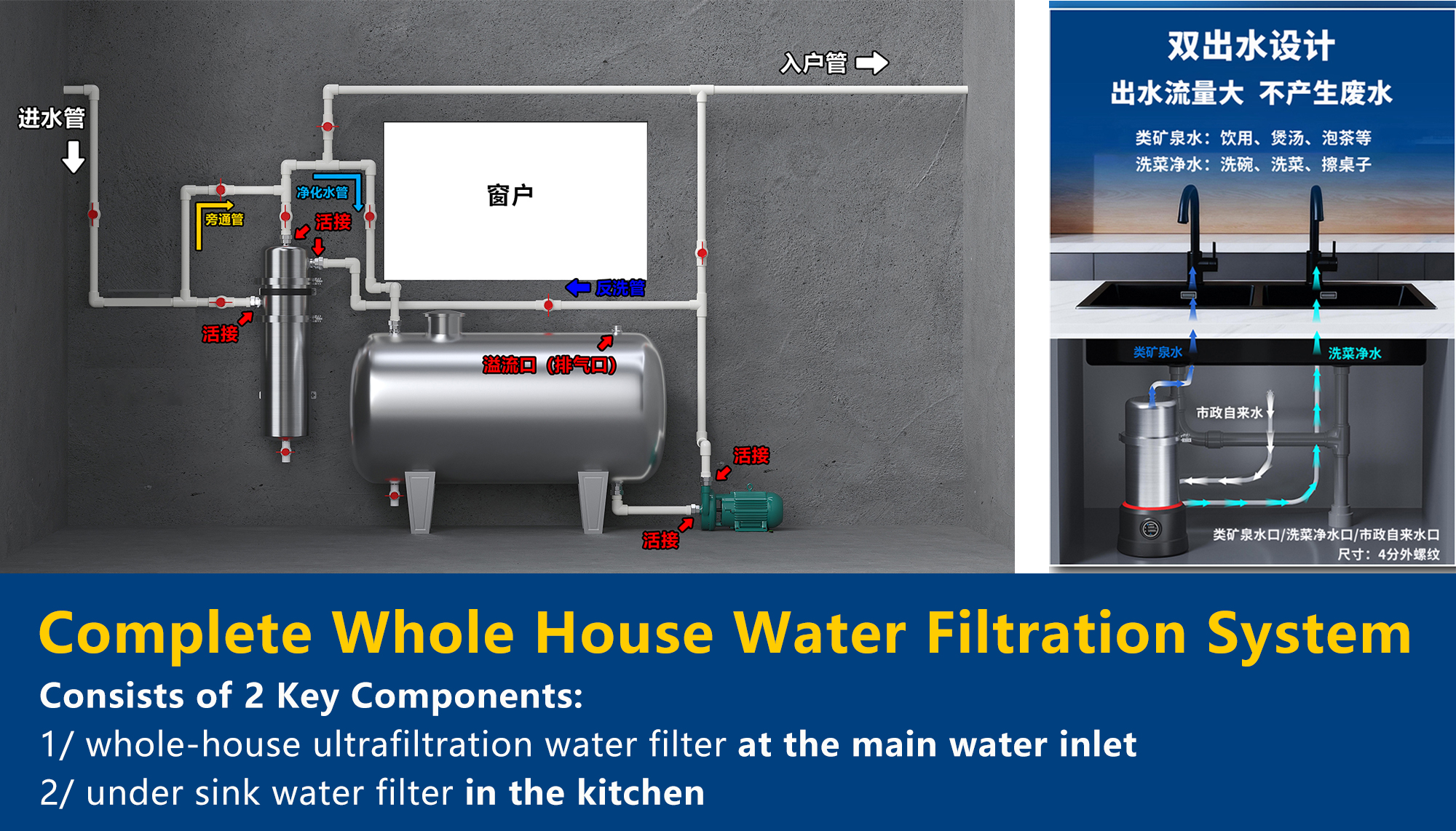
2. Whole House Water Filtration System at the Main Water Inlet
The whole-house water filtration system is mainly used to intercept impurities in raw water, such as sediment, rust, colloids, insect eggs, and other contaminants. However, to achieve truly effective whole-house water filtration, the filtration system you choose must not only have an interception function but also ensure the filtration is actually effective.
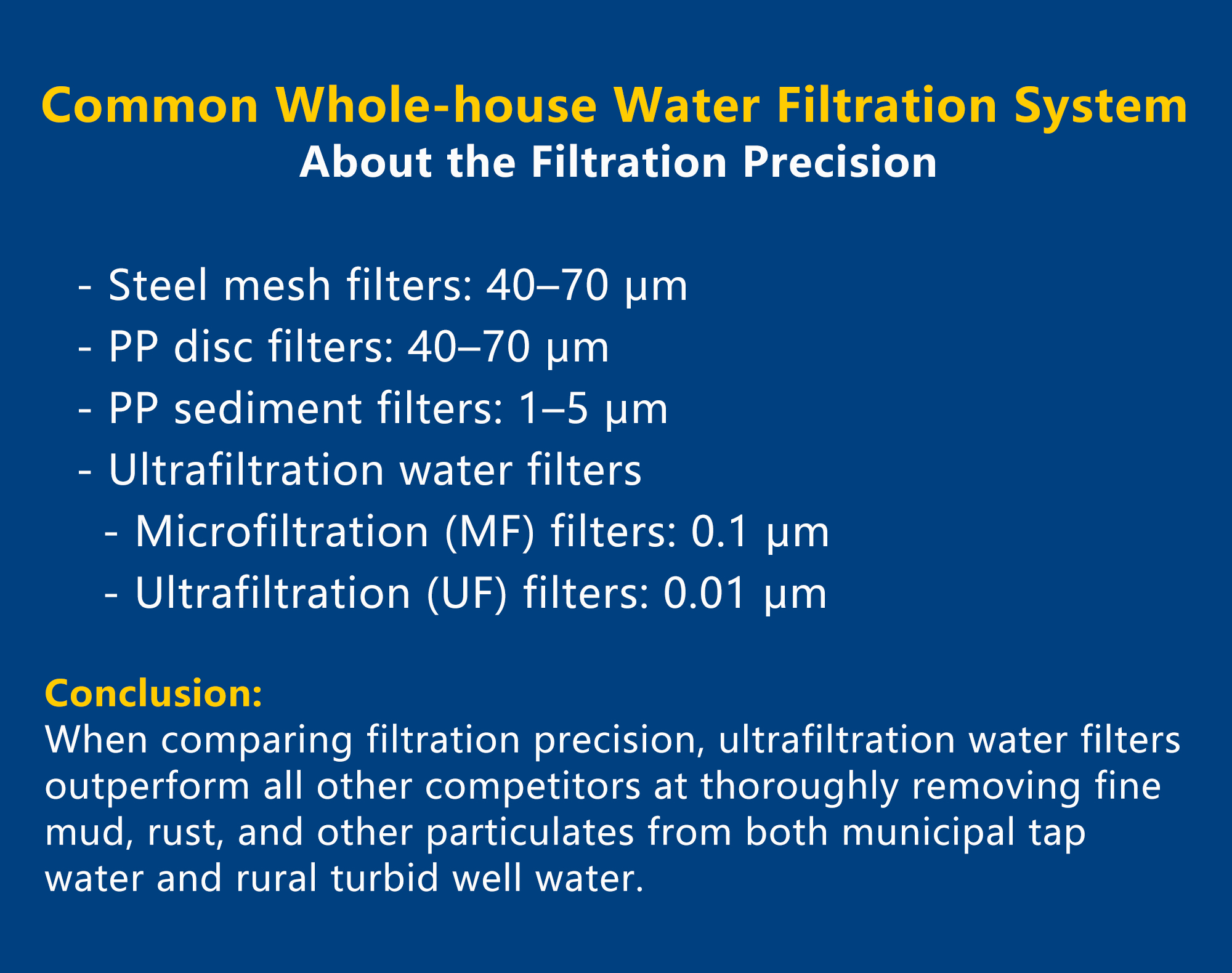
Common whole-house water filtration system with interception capabilities include:
- Steel mesh / PP disc filters: 40–70 μm filtration precision
- PP sediment filters: 1–5 μm filtration precision
- Ultrafiltration water filters: available in two types: 0.1 μm microfiltration and 0.01 μm ultrafiltration membranes
When comparing filtration precision, ultrafiltration water filters outperform all other competitors at thoroughly removing fine mud, rust, and other particulates from both municipal tap water and turbid rural well water.
Of course, if you have extra budget and don’t mind learning through trial and error, you’re free to explore other options — but for practical whole-house filtration performance, the ultrafiltration water filter is hard to beat.
That’s why I’m glad I chose the ultrafiltration water filter niche market when I started my business. the performance of ultrafiltration water filter in whole-house water filtration system is nearly unrivaled on the market.
Compared with other competitors, ChengrongEra ranks among the top 1% in the industry in terms of manufacturing quality, product functionality, and structural design. We offer a 5-year warranty on the filter cartridge and strive for perfection in both products and customer service — something you won’t find anywhere else.
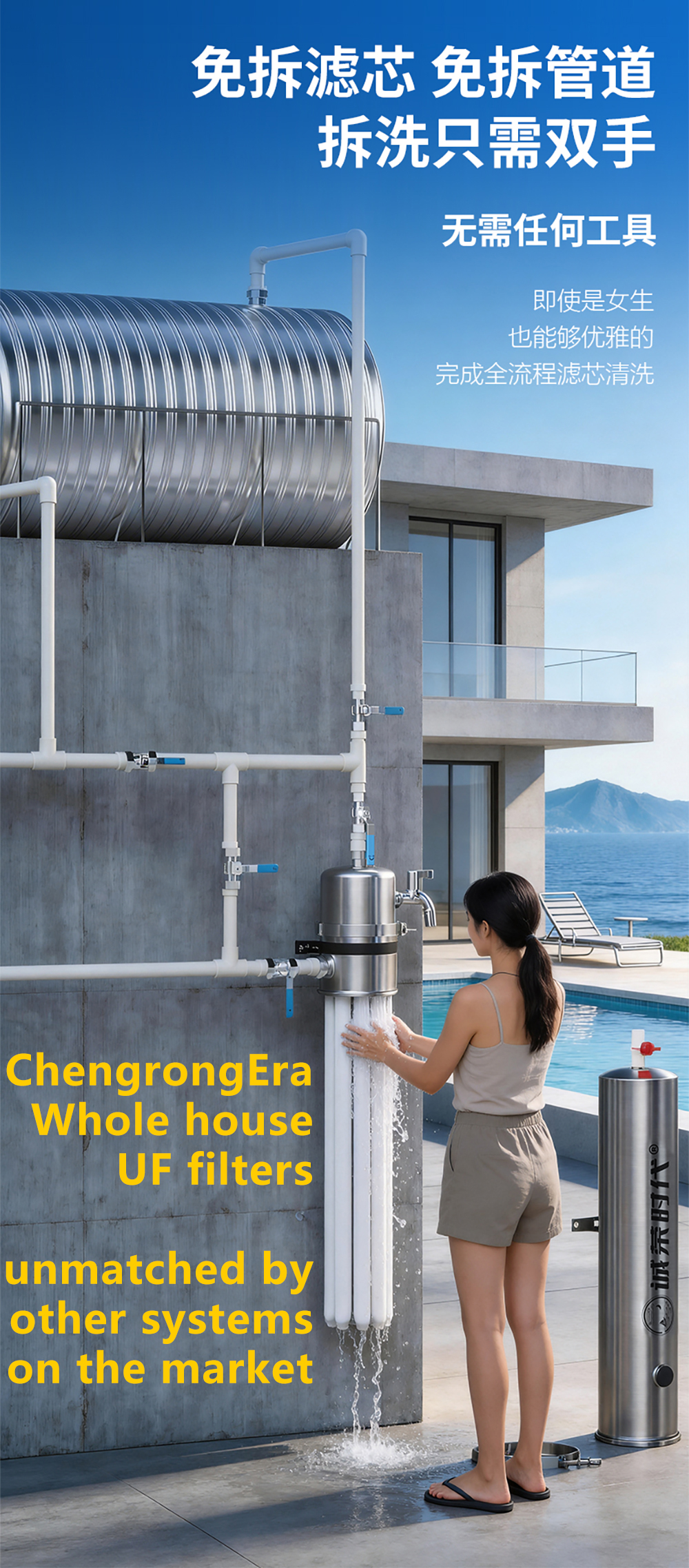
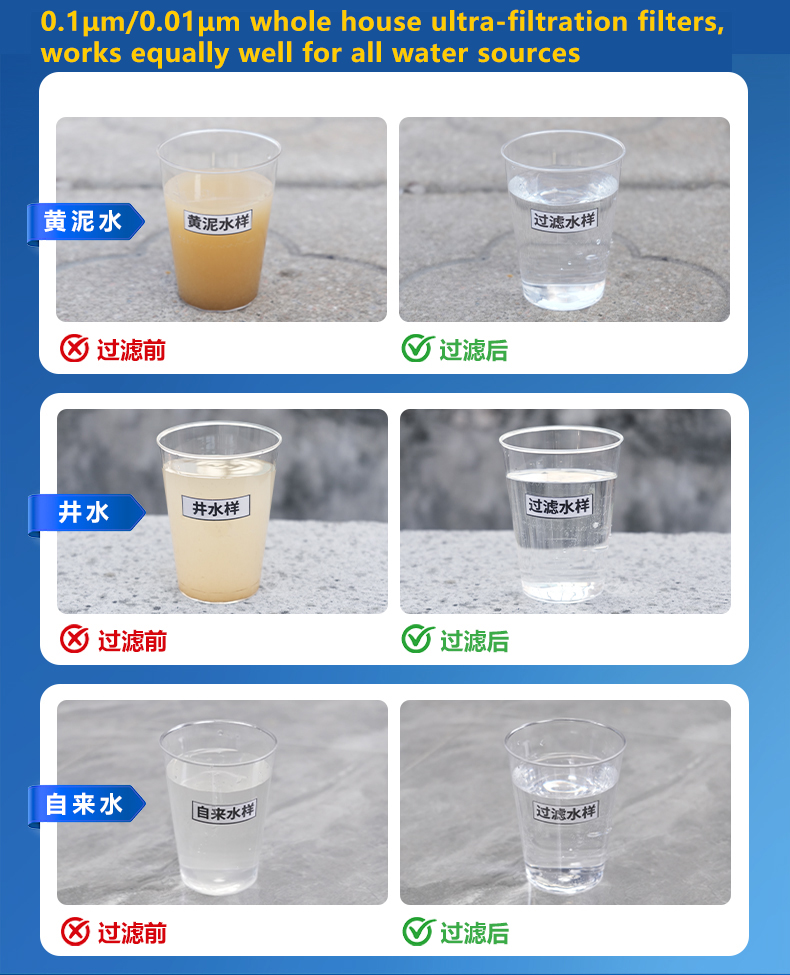
You may have many questions about the whole-house ultrafiltration filtration system installed at the main water line. Next, I’ll answer your questions one by one.
For example:
Can whole-house ultrafiltration filters remove limescale?
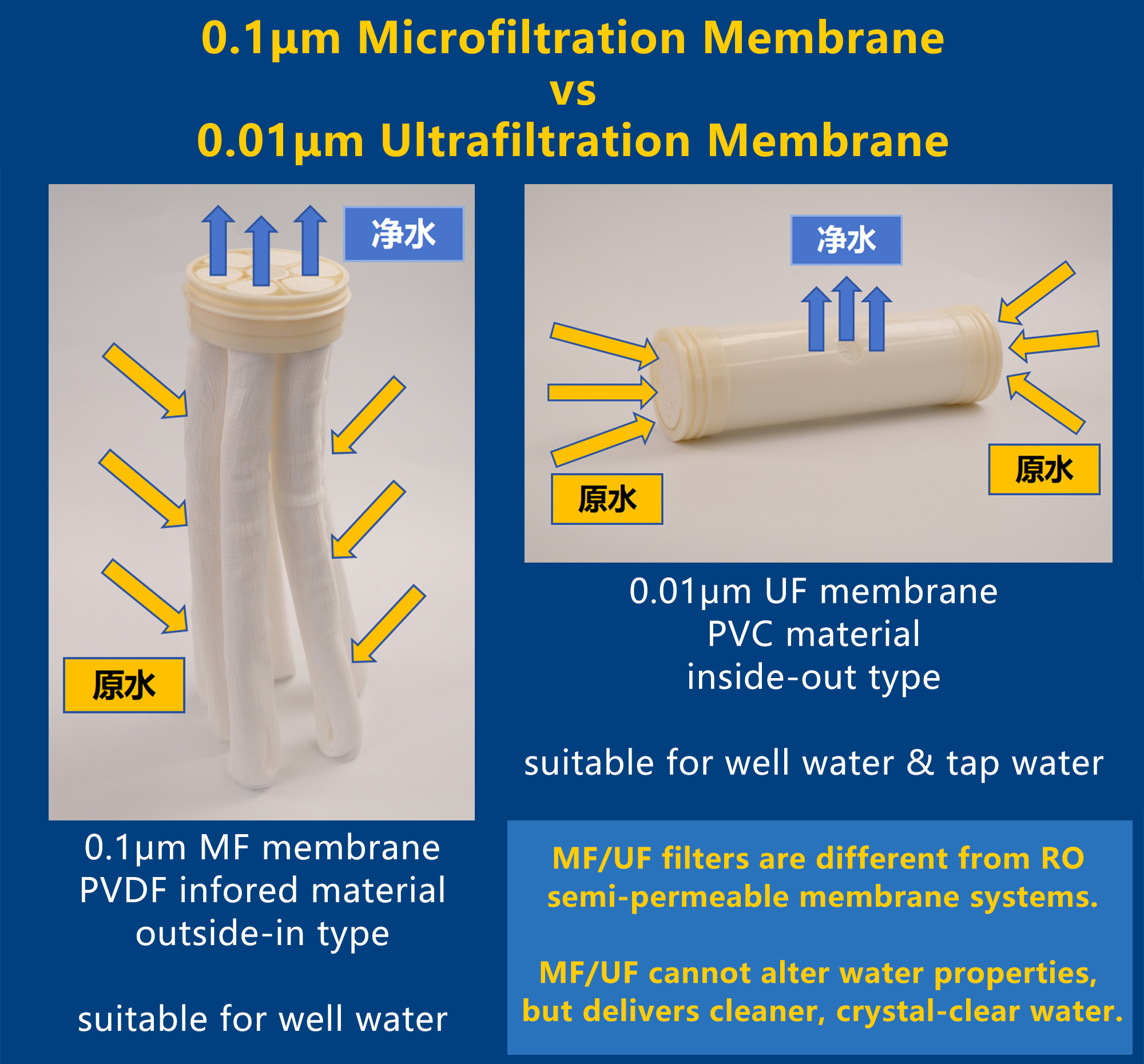
The answer is NO. Ultrafiltration filters are different from RO semi-permeable membrane systems, it cannot alter water properties, but only delivers cleaner, crystal-clear water.
The 0.1μm microfiltration membrane (also known as PVDF reinforced membrane, and outside-in membrane) can completely intercept fine mud, sediment, rust, colloids, insect eggs and other impurities in the water. It is especially ideal for filtering natural water sources such as turbid rural well water, spring water and stream water.
The 0.01μm ultrafiltration membrane (also known as PVC ultrafiltration membrane, and inside-out membrane) not only clarifies the water quality, but also intercepts 99.99% of bacteria and viruses in the water. Many customers living in large apartments and villas prefer PVC ultrafiltration systems for their whole-house water filtration systems.
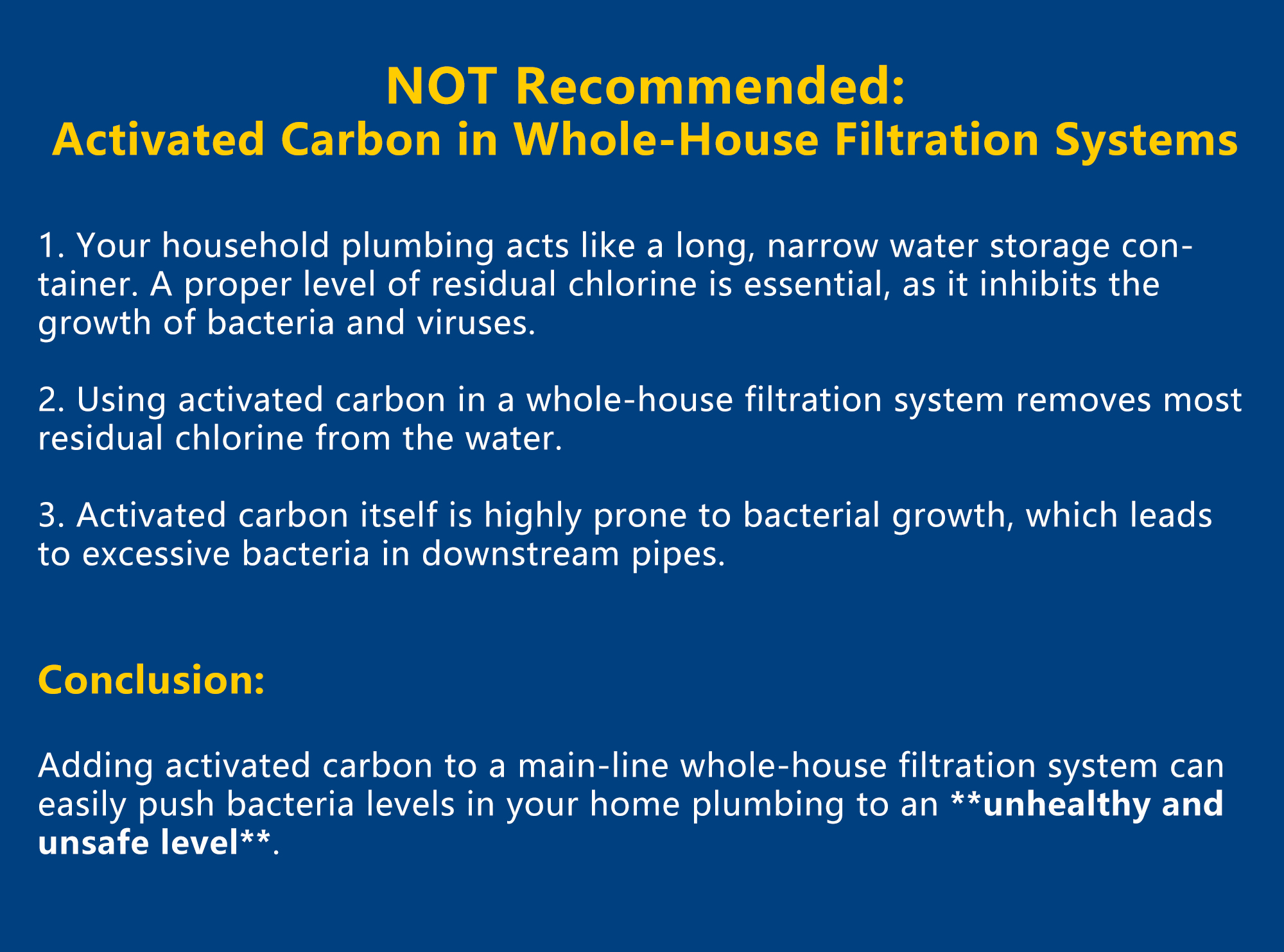
When it comes to bacteria and viruses inside household water pipes, we do not recommend ChengrongEra customers to use activated carbon in whole-house filtration systems at the main water inlet.
Activated carbon is mainly designed to absorb odors and residual chlorine in water and improve water taste.
However, household plumbing acts like a long, narrow water storage container. A proper amount of residual chlorine is essential, as it effectively inhibits the massive growth of bacteria and viruses.
If you use activated carbon in a whole-house water filtration system, it will remove most residual chlorine from the water. Furthermore, activated carbon itself is highly prone to bacterial growth, which leads to excessive bacteria in downstream pipelines.
For these two reasons, we strongly advise against using activated carbon for chlorine removal in main-line whole-house water filtration systems. Otherwise, bacteria levels throughout your home plumbing will rise to an unhealthy and unsafe level.
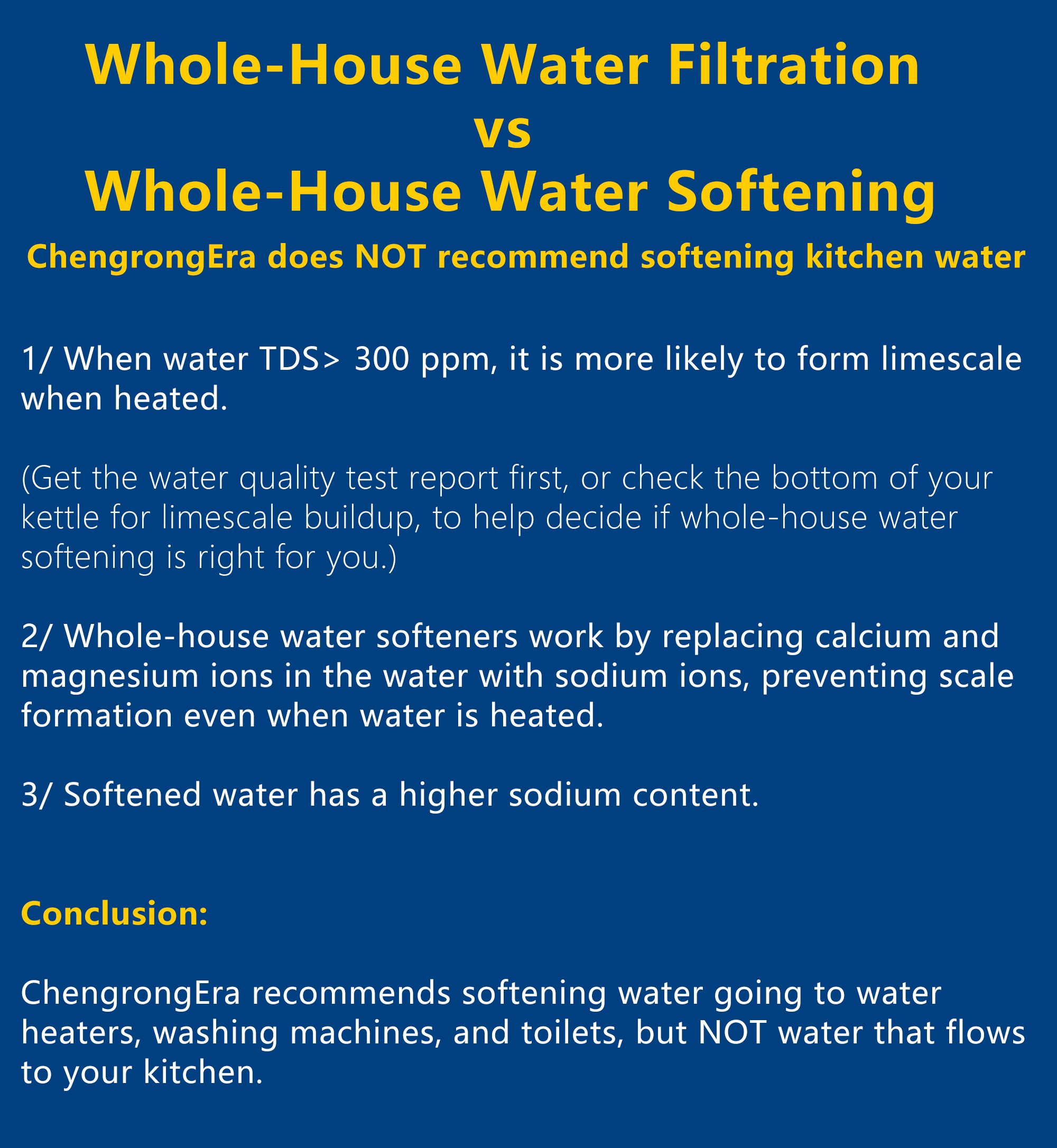
When talking about whole-house water filtration system, there is one question often asked by our customers: “Can ChengrongEra ultrafiltration filters remove limescale?”
This question shows that, many users confuse whole-house filtration systems with whole-house water softening systems.
Limescale is formed when calcium and magnesium ions in water precipitate out under heating.
Generally speaking, when the TDS level is below 300 ppm, calcium and magnesium ions in water are less likely to form scale. You can check your kettle: if there is heavy scale buildup at the bottom after using it for a while, you may want to consider whole-house water softening.
As heavy limescale will reduce the working efficiency of water heaters and other household water-using appliances, shorten their service life, and clog pipelines and showerheads, which worsens your daily water experience. In addition, limescale is highly prone to bacterial growth.
Whole-house water softeners use ion-exchange resin to replace calcium and magnesium ions in water with sodium ions, reducing water hardness so that the water does not form scale even when heated, but it will also cause a higher sodium content.
From my 19-year experience, I recommend ChengrongEra customers only soften water going to water heaters, washing machines, and toilets — not the water that flows to your kitchen for drinking and cooking.
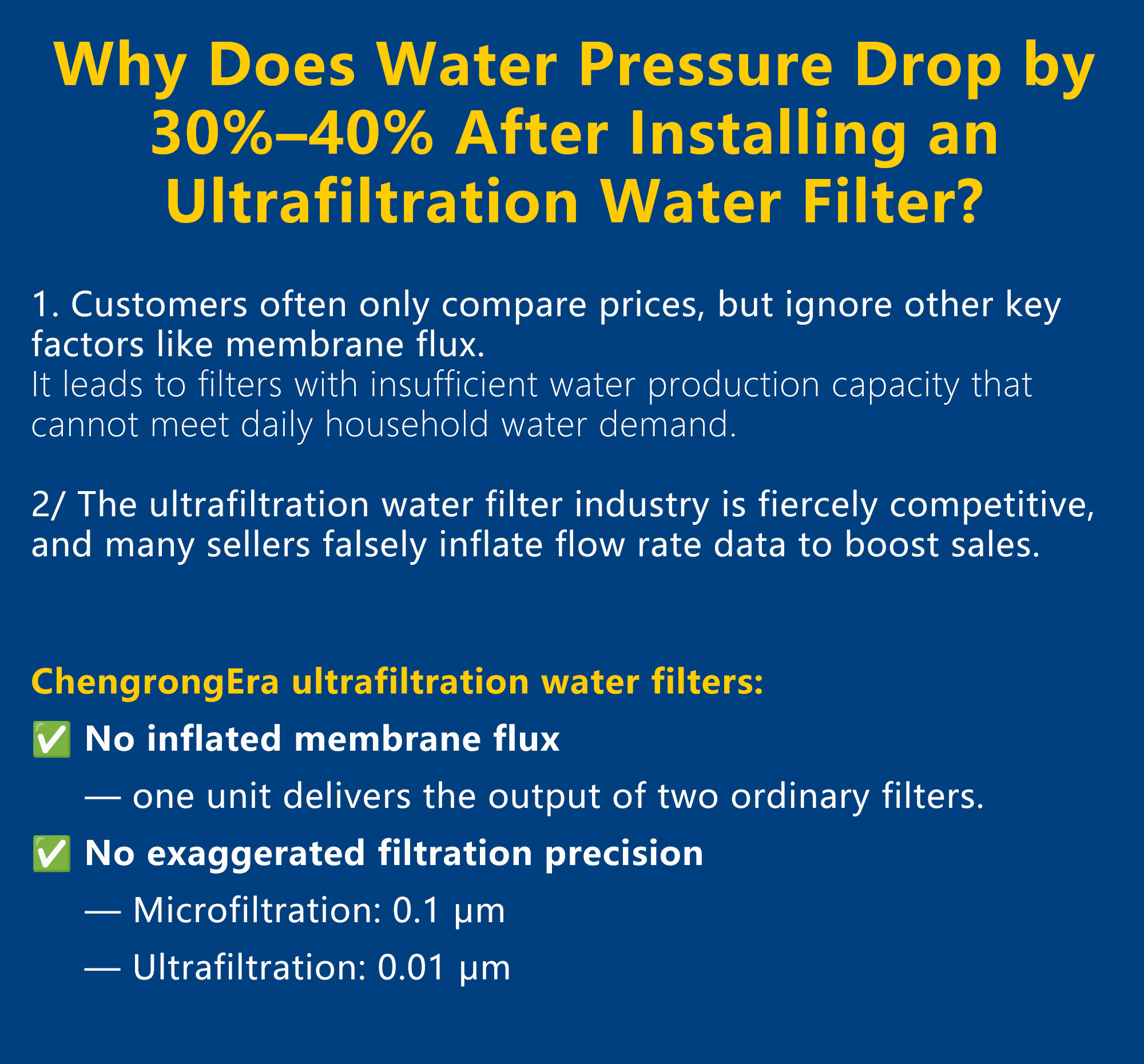
Many customers ask: Why does my household water pressure drop sharply by 30% to 40% after installing an ultrafiltration water filter from other brand?
There are two main reasons:
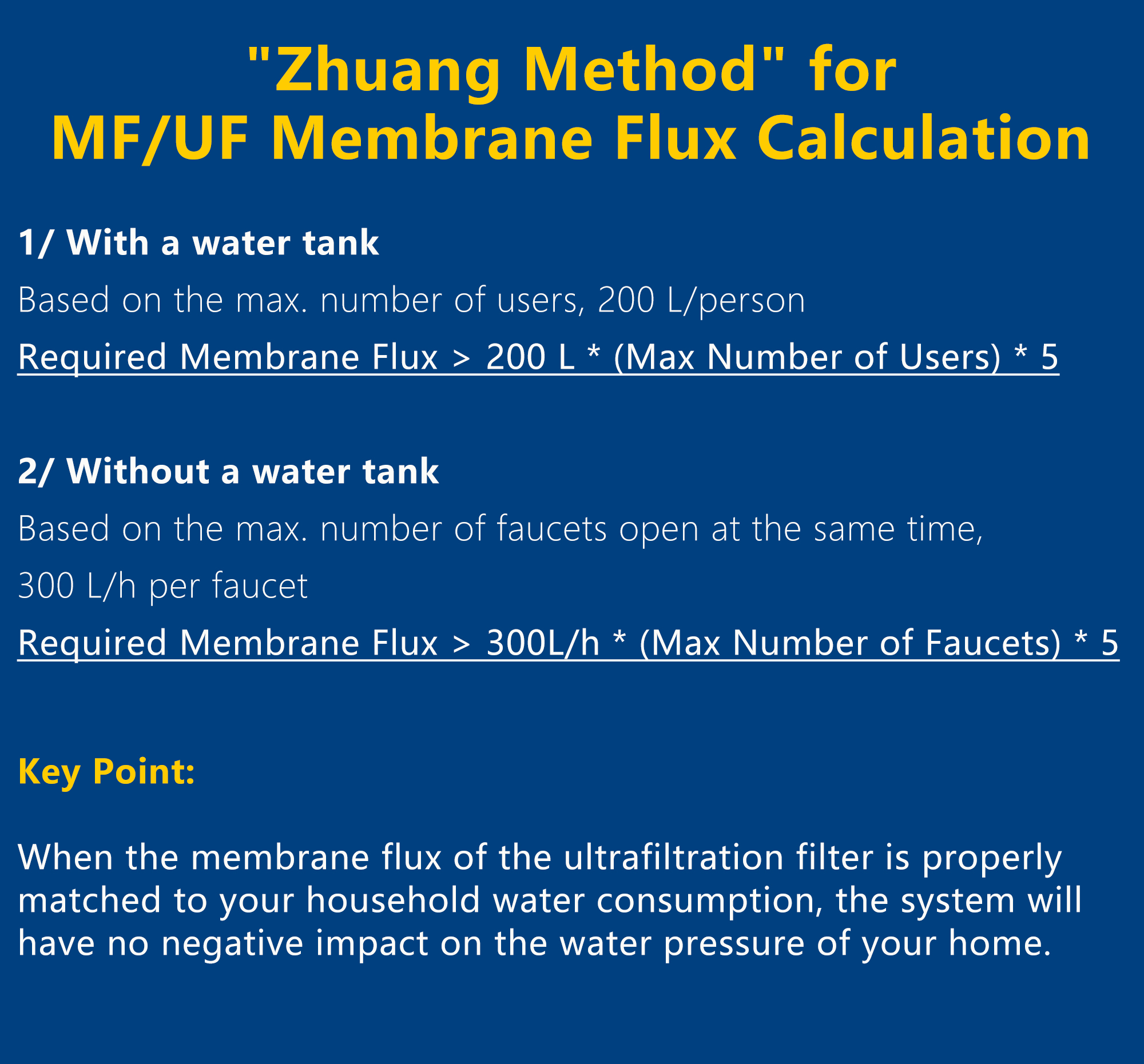
First, most customers only know to compare prices when purchasing ultrafiltration water filters and ignore all the other key parameters. They end up choosing filters with an insufficient membrane flux, which cannot meet daily household water demand.
Second, the ultrafiltration industry faces fierce cutthroat competition. Many sellers falsely inflate flow rate data to boost sales.
ChengrongEra always recommends filter cartridge specifications based on each household’s actual water consumption. We would rather lose a sale than compromise your daily water experience.
Additionally, most filter cartridges on the market that fall under the "ultrafiltration" category are uniformly marked as 0.01 μm — even many microfiltration cartridges are falsely labeled as such. As a leading full-supply-chain ultrafiltration manufacturer, we strictly distinguish true ultrafiltration membranes from microfiltration membranes.
3. Kitchen Under Sink Water Filters
Under-sink kitchen water filters are primarily used for drinking and cooking, making water source safety absolutely critical.
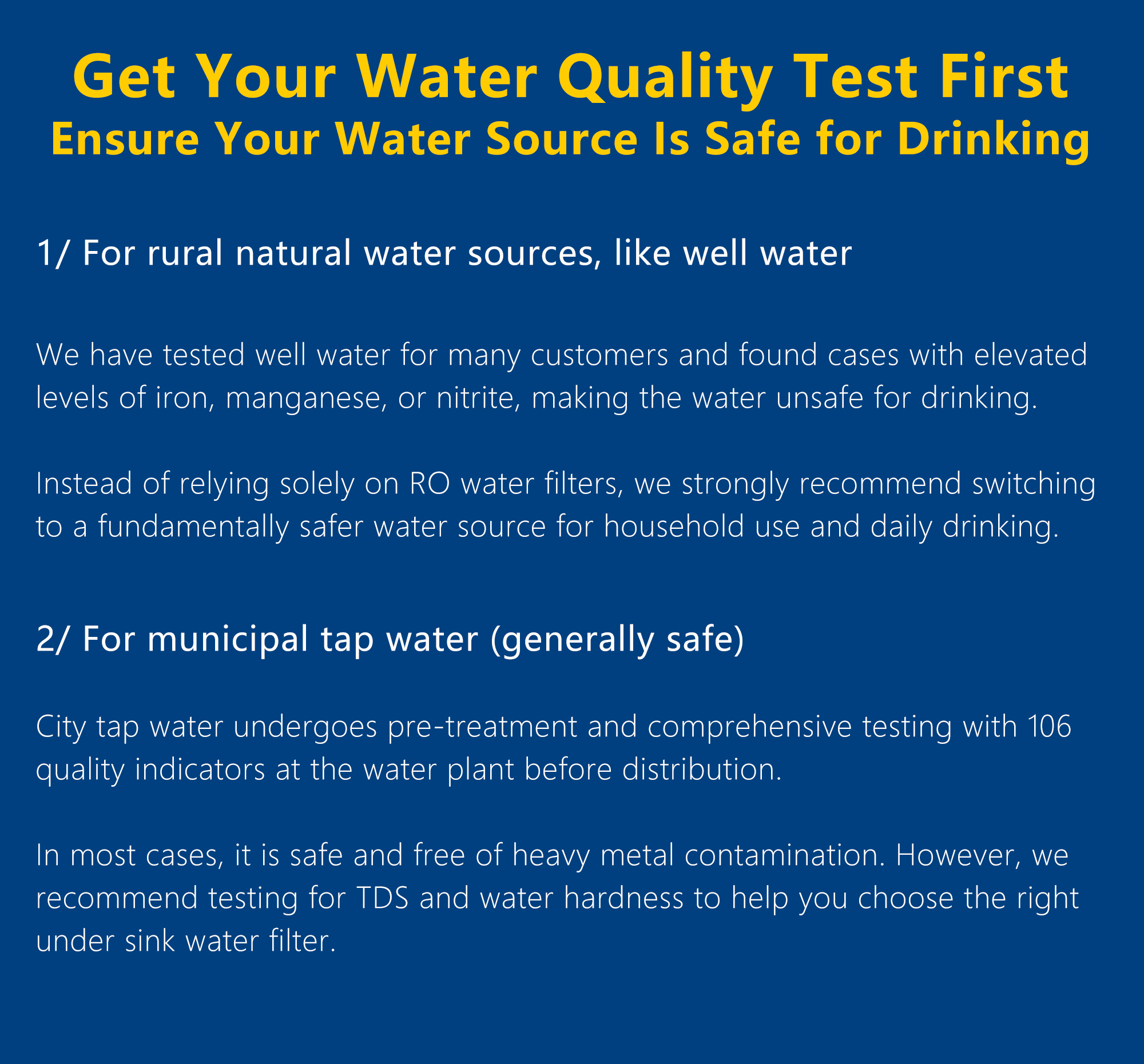
I strongly recommend rural households using natural water sources to get a professional water quality test first, whether they install an under-sink filter or not. Even without industrial pollution, many rural natural water sources still do not meet safety standards due to local geological conditions. Common issues include elevated levels of iron, manganese, or nitrite, making the water unsafe for drinking and daily use. Rather than relying solely on RO reverse osmosis water filters, we strongly recommend starting with a fundamentally safer water source.
With a safe water source confirmed, you can choose the right kitchen under sink water filter based on your water’s TDS level and hardness.
Currently, there are two main types of kitchen water filters on the market:
- RO reverse osmosis water filters, which produce pure water that is clean but demineralized.
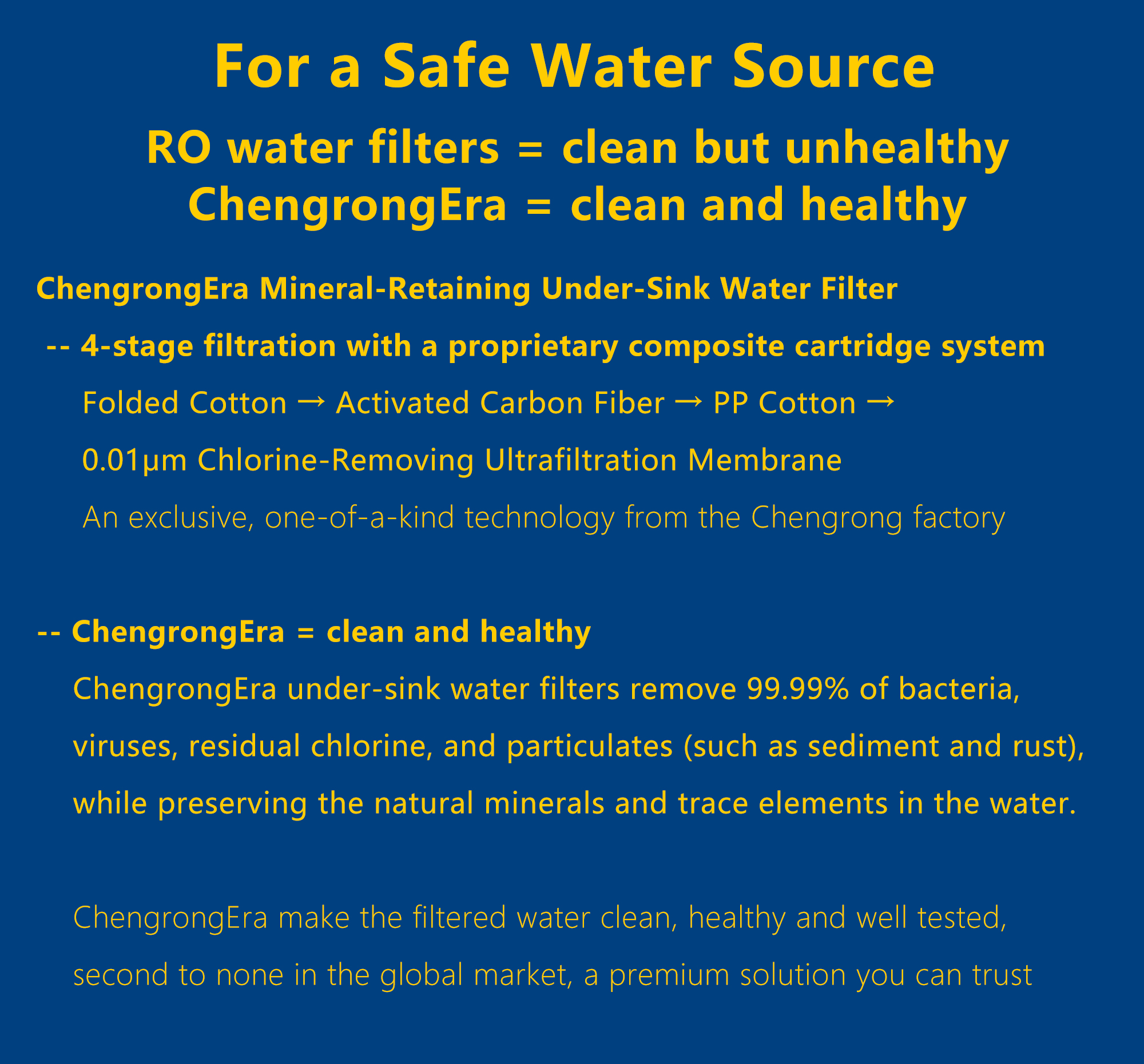
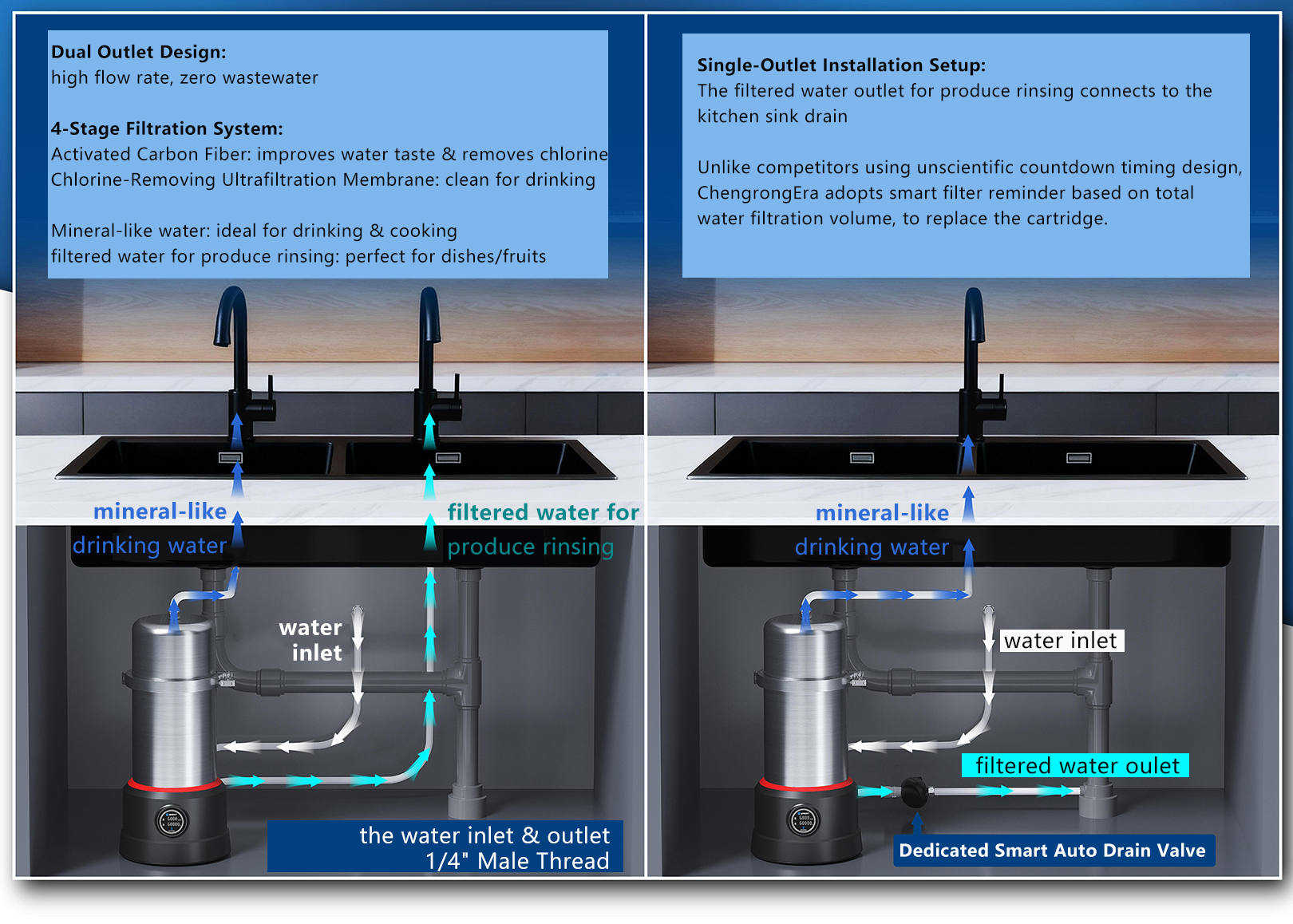
- ChengrongEra mineral-like water filters, which produce water that is both clean and healthy, similar to natural mineral water.
If your TDS is below 300 ppm, we recommend a ChengrongEra mineral-retaining under sink water filter. At this level, the naturally occurring minerals and trace elements are not only beneficial to health but also improve the water’s taste.
If your TDS is above 300 ppm, calcium and magnesium ions can form limescale. If you are concerned about scale buildup, an RO reverse osmosis filter is an option, but the pure water produced by RO system is clean yet unhealthy.
More and more consumers are realizing that while RO pure water is clean, it is not the healthiest choice. Unless your water source is severely contaminated, an RO system is often unnecessary. This is why many RO filters now come with remineralization cartridges.
Even so, artificial remineralization cannot replicate the benefits of naturally occurring minerals. The synergistic effect of multiple trace elements found in natural water is far more bioavailable to the human body.
4. Complete Whole House Mineral-like Water Filtration System