TDS refers to the total level of dissolved minerals in water.
If the TDS value of water is extremely low, it will taste tasteless and flat.
According to research by Professor Shu Weiqun from Army Medical University, water generally has a good taste when its TDS value ranges from 50 to 300mg/L, reaches optimal taste between 300 to 600mg/L,
has an average taste from 600 to 900mg/L, and tastes poor when the TDS value is 900 to 1200mg/L. When the TDS value exceeds 1200mg/L, the water often has unacceptable off-flavors.
High TDS levels can affect the service life of water-contacting appliances. When the TDS value in water is higher than 500mg/L, scale buildup is likely to occur, which can shorten the service life of household water-using appliances.
For surface water, a high TDS value indicates a higher probability of chemical contamination. Therefore, we generally recommend that customers conduct a professional water quality test first for uncontrolled water sources such as mountain streams, spring water, and well water before using them as domestic drinking water to ensure water safety.
For desalination-capable water purifiers such as RO (reverse osmosis) water purifiers and nanofiltration water purifiers, the TDS value of the treated water should be significantly lower than that of the incoming water when they are working normally. If there is little change in TDS between the incoming and treated water, it means these desalination water purifiers have lost their desalination capacity and need to be inspected and maintained immediately.
Thus, the TDS value cannot fully reflect the quality of water. However, since RO reverse osmosis water purifiers remove minerals and trace elements from water, the TDS value of the purified water will be low, this mainly indicates that the RO membrane is functioning properly.
Why Can’t TDS Values Fully Reflect Water Quality?
Because TDS alone cannot indicate the presence of the most dangerous contaminants in water, specifically, microbial pollution from bacteria, viruses, protozoa, and other microorganisms.
Additionally, TDS values do not reveal whether toxic heavy metals exceed safety limits. Toxic heavy metals have extremely low toxicity thresholds and are strictly regulated by drinking water standards. For example, China’s national drinking water standards set limits for toxic heavy metals such as arsenic (0.01mg/L), lead (0.01mg/L), and cadmium (0.005mg/L). Even if multiple toxic heavy metals exceed their limits simultaneously, their combined contribution to the total TDS is rarely more than 1mg/L, yet such water is already unfit for domestic drinking use.
Furthermore, TDS alone cannot reflect whether levels of radioactive elements in water exceed safety thresholds.
Finally, TDS values fail to indicate contamination by trace organic compounds—substances with low concentrations but high potential toxicity—because their impact on TDS is negligible.
Thus, judging water quality solely by TDS values is insufficient. A professional water quality test is essential to verify true water safety.
Portable TDS meters are easy and quick to operate, but their principle relies on measuring water’s electrical conductivity to indirectly reflect TDS levels, resulting in inherently low accuracy. Furthermore, TDS can only capture partial properties of water quality. As such, TDS meter readings may serve as a reference for mineral content, but they cannot determine water safety regarding microorganisms, nuclides, or toxic heavy metals.
This is precisely why water treatment plants conduct 105-item comprehensive safety tests instead of relying solely on TDS values to assess water quality. For municipal tap water, there is no need to doubt its safety: the risk of toxic heavy metals (which ultrafiltration membrane cannot remove) is nearly zero in tap water, and this risk decreases even further over time.
Today, drinking water is no longer just about safety, it’s about health. Minerals and trace elements in water are a stable source of essential nutrients for our human body. Since the dawn of humanity, we have consumed water rich in these natural minerals and trace elements, which impart a sweet, refreshing taste. In contrast, RO reverse osmosis water purifier, a product of the era of extensive industrial development, only delivers "clean" water, not "healthy" water.
Modern consumers seek more than just safety and cleanliness, health is now a top priority.
ChengrongEra Mineral-Like Water Purifiers address two critical industry pain points:
- It solves the lack of minerals in RO reverse osmosis water filtration systems.
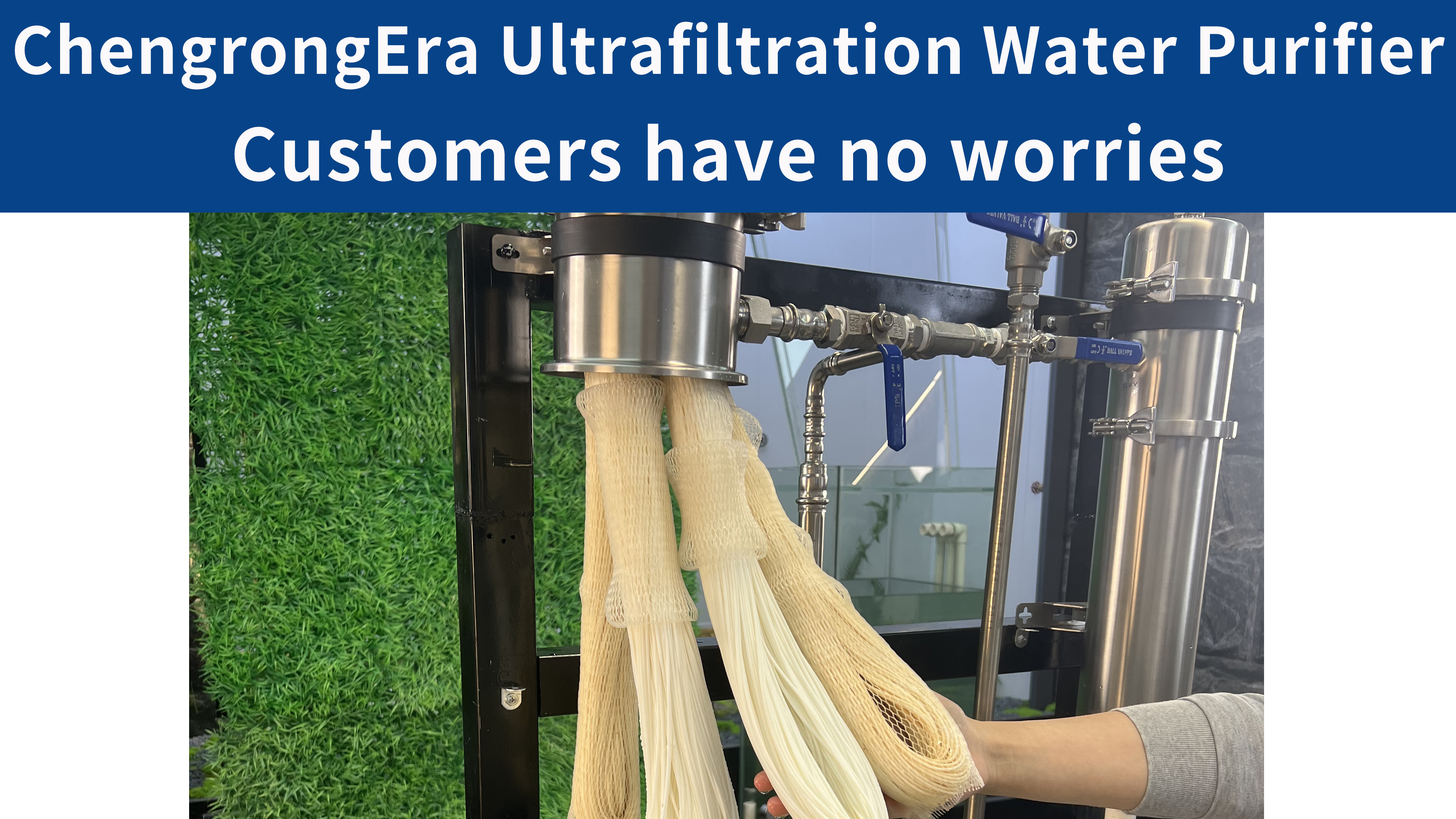
- It overcome the structural flaws of most ultrafiltration kitchen purifiers on the market, which fail to filter out bacteria, viruses, and residual chlorine.
Few other kitchen under-sink water purifier in the industry can match our unique value: removing harmful contaminants (bacteria, viruses, residual chlorine) while retaining natural minerals and trace elements.
Of course, everyone has their own perceptions about water, and every choice we make reflects those perceptions. What we promise is ultimate responsibility to every ChengrongEra customers: we never sell shoddy/counterfeit products, crudely manufactured goods, or "three-no" products (no brand certification, no quality assurance, no safety compliance).
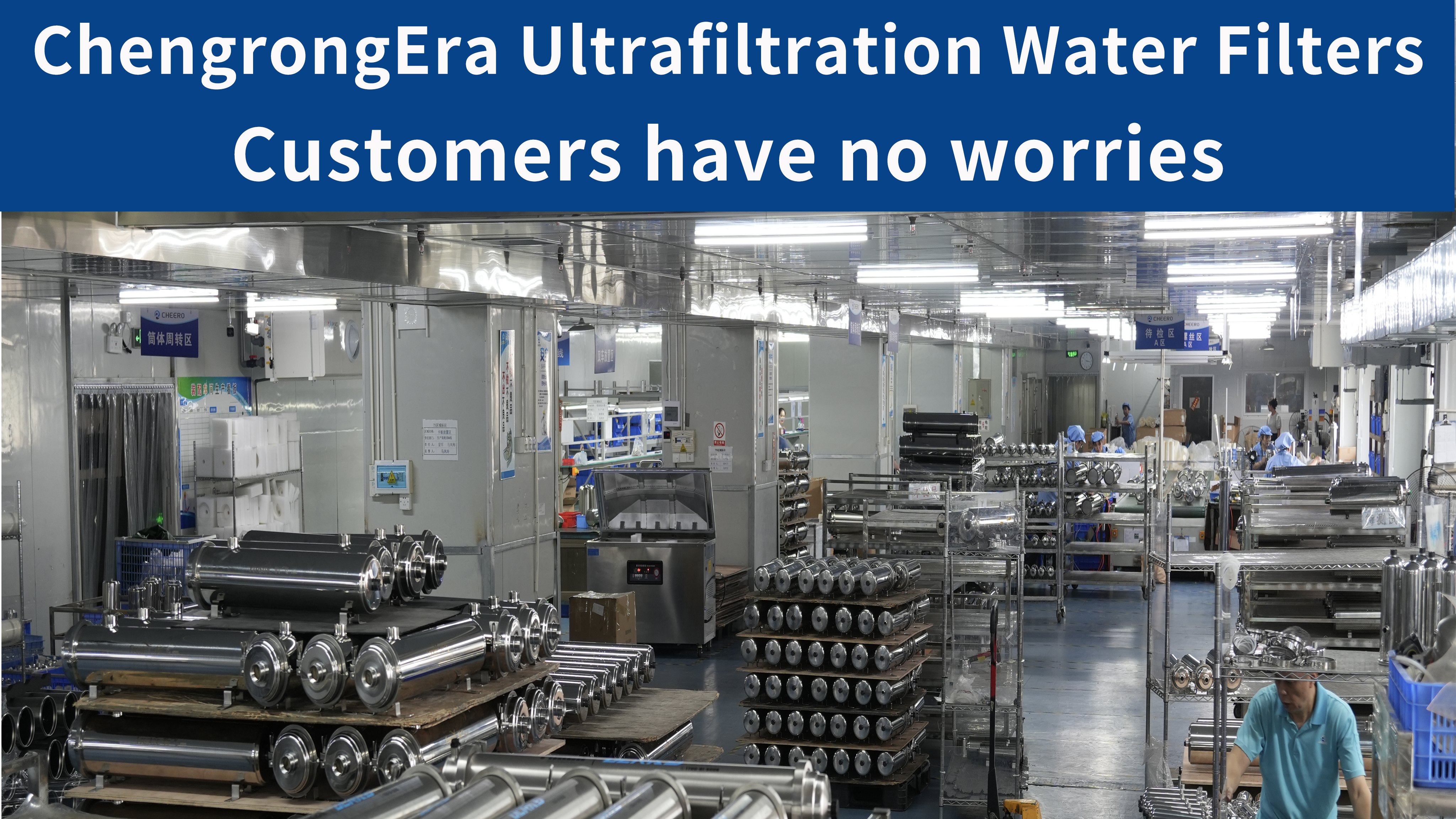
ChengrongEra Ultrafiltration, No Worries for Customers
10-Year Rust-Free Guarantee
10-Year Leak-Proof Commitment
10-Year After-Sales Service Support
chengrongEra Water Purifiers, Never Compromise on Quality
Wechat: 159 8882 8791
(Ms. Liu Jinlu (Claire), Assistant to Mr. Zhuang Beikan, In Charge of Foreign Trade Operations)
Email: chengrongera2025@outlook.com